
Chapter Text
Fuck I’m late.
I sprinted from the parking lot as fast as my legs could carry me. My Yamaha YZF-R3 motorcycle was left in a not-so right position in the parking spot. I didn’t care though; I at least remembered locking it before I took off running to the hall. My tucked-in shirt became slightly unraveled from all the running, making my appearance a bit disheveled.
Why the hell do tournaments require the players to wear formal clothes anyway. Just kidding, I know why; It’s to instantiate a sort of regal and superior standing of all the other sports. A sport only intellectuals play. Chess is often seen as a measure of intelligence. The higher your playing level, the more people perceive you to be of superior intellect. And for most cases, this stereotype has a kernel of truth to it. Hedge funds often employ high level chess players to trade and spot patterns in the stock exchange. Leveraging their pattern-recognition and memorization to the fullest benefit of the clients. They want people who can calculate risk and maintain emotional discipline under extreme pressure.
That is to say, not all chess players are smart. Some of them spend almost all their intelligence points on chess only and neglect real-world stuff. Psychologists often debate whether chess skill is General Intelligence (g factor) or just highly Specialized Expertise. While there is a correlation between high IQ and learning chess quickly, once you get to the Master level, the game becomes more about chunking—the ability to store thousands of specific patterns in long-term memory.
Not for me though.
I continued my sprint, darting my way to the elevator that I knew would take me straight to the entrance hall. As I reached it, I quickly punched the up button and the door opened immediately. I entered the quite spacious elevator and punched the button for the ground floor. As I waited for it to arrive at the floor I wanted, I took the time to steady my breath and think about my opponent.
IM Yamirov Shevchenko. An aggressive player by all means. Loves the Italian and Spanish openings as white, and the Sicilian as black. Great in classical, decent in rapid and blitz. Most of it I assume were attributed to prep time. Against me though, he’s got no plan. I usually play unorthodox openings for classical and standard ones for blitz and rapid, taking advantage of the lower time controls and calculation time. He’s going to have to spend hundreds of hours alone just to study my game plan.
In classical chess, where players have hours to think, the goal of prep is to eliminate the need to think for as long as possible, and to think in the middlegame and endgame. Oftentimes, players spend 20 – 40 minutes just to move a pawn up a square. The number of lines and probability calculation high levelled chess players do in a classical game is mind boggling. Sometimes 10 to 20 moves ahead for a single line. Keep in mind that there are so many possible lines after a certain number of moves.
The number of possible positions in chess is governed by Shannon’s Number. Because each player has roughly 30 to 35 legal moves available at any given time, the branching factor is immense.
After 1 Move (1. e4): 20 possible positions for White.
After 2 Plies (1. e4 e5): 400 possible positions.
After 4 Plies (2 moves each): 71,852 possible positions.
After 10 Plies (5 moves each): Approximately 69 trillion (69,352,859,712,409) possible positions.
By the time you reach move 10, there are more possible variations than there are stars in the Milky Way galaxy.
While there are trillions of legal ways to reach move 5, the number of logical ways is significantly smaller, often called the “Master Database”. In professional play, players stick to "theory." Like sure the chess database has millions of games played with disgustingly high accuracy, but one can only memorize so much of theory before you run into a line where no one has played or rarely played before. This is why the strategy of playing unorthodox lines is so effective. It’s also one of the reasons why GMs like Magnus Carlsen is so hard to beat is because he often makes unconventional moves in the opening sequence.
Let’s put it this way, if Yamirov Shevchenko prepares for the Sicilian Defense (1. e4 c5), he is narrowing those trillions of possibilities down to a specific "tree" of moves. He might know 20 moves deep into the Najdorf or Dragon Variation.]
However, if you play an unorthodox move on move 2 or 3 (like an early g4 or Na3), you are forcing him out of the "Master Database" (the 5,000 known positions) and back into the "69 Trillion" mathematical abyss. Even an IM cannot calculate trillions of variations; they rely on patterns. By move 5, you can effectively make an IM "blind" by choosing a path that hasn't been travelled yet.
“Ding”
The sound of the elevator doors opening snapped me out of my reverie. I hastily walked out and jogged my way to the hall’s entrance. Rows of cameras were already there to capture the splendor of the Moscow Open Tournament There are some big names here tonight. Most notably GM Danil Dubov, GM Ian Nepomniachtchi, GM Alexander Grischuk, and me.
Yes, me. My name is Muhammed Khalid from Malaysia. I’m only 18 years old. I became a Grandmaster at the tender age of 10, making me the youngest ever to achieve a GM title. My current rating for Classical is 2757, Blitz 2776 and Rapid 2763, A super GM. I hate to toot my own horn here, but I AM kind of a prodigy in the chess world.
…..
Ok maybe I was given an unfair advantage over others. But that’s a story for another day.
As I reached the entrance hall, the reporters quickly turned their heads my way and snapped a shitload of pictures. Their camera flashes instantly obscured my view of the entrance. I guess it can’t be helped. When you’re the only GM in Malaysia and at such a young age as well, there’s bound to be fame wherever you go. Just look at India, Vishwanathan Anand was typically revered as an idol there. Along with Praggnanandhaa and Gukesh for being the youngest ever GMs in their country.
A guard quickly took control of the situation and escorted me to the entrance, where a Fair-Play officer was waiting for me with a slightly exasperated look. It’s not the first time that I’ve arrived late for the tournament. I did the same thing yesterday and the day before as well. I gave the officer a cheeky grin and raised my arms to let him scan me with his… errr… metal scanner? Cheating detection device? I honestly don’t know what it is and how it’s supposed to detect a device for cheating. It certainly didn’t detect anything when Hans Niemann went against Magnus though. Maybe they didn’t search the correct places (iykyk).
“Sorry I’m late sir” I said in Russian with an apologetic smile as the officer scanned me.
“I’m used to it. It’s ok” the officer replied while sighing. I let out a chuckle and power-walked to table number 2 as soon as he’s done where IM Yamirov Shevchenko is already seated. The clock is ticking in my turn. I glanced at the time.
59:13 – 1:30:30
Damn, I’m 30 minutes late. No biggie though.
I quickly took a seat at my table and shook his hand. The guy is a middle-aged Ukrainian dude. He’s wearing a nice two-piece tailored navy-blue suit with the Ukraine flag pinned to his suit collar. I guess dude’s a patriot. Ukrainian people are like that sometimes.
Alright, let’s do this shit.
I rolled up the sleeves of my shirt and started to do the Magnus procedure. Well, it’s not called the Magnus procedure per se, it’s mostly known as the "J’adoube" ritual. Under FIDE Rule 4.2.1, if you touch a piece on your turn, you must move it. The only way to touch a piece without moving it is to first say the French word "J'adoube" (pronounced zha-DOOB) or simply "I adjust."
While most players would just straighten a piece that looks tilted, Magnus turned it into a full-blown ritual. He would often adjust every single piece, even if the pieces look perfectly centered, he will go through a sequence, starting with the Rooks and moving inward. He ensures the base of every piece is exactly in the middle of the square. He has been known to let 30 seconds of his own time run out at the very start of a match just to finish his "adjusting." It tells the opponent: "My time doesn't matter; I’ll beat you anyway " Just a really gangster move to make. It really messes up your opponent’s psyche sometimes.
As I complete my ritual, I looked up at Shevchenko and made my first move.
e4.
A typical opening move. The most common one for a game. Shevchenko responded with a line I didn’t expect from him though. e6, the French Defence.
Don’t get me wrong, it’s a solid opening. One of the best for counter-plays. The defining feature of the French is the pawn chain created after. By placing pawns on e6 and d5, Black creates a rock-solid foundation that is incredibly hard for White to blast through.
That’s to say, I didn’t expect this line from him is because he’s an aggressive player. He always plays the Sicilian variations and the main Spanish line. I guess he realized that by being aggressive, he’s essentially going to lose to me in a straight up fight. So, he opted for a defensive approach.
Smart guy, he must’ve also known that the French defence has an astonishingly high draw rate at high level plays. So I’m guessing he’s planning to potentially draw this game against me.
But nah, I’d win. (Yes, it’s a JJK reference)
I continued with my opening: d4
He responded with d5.
I continued with E5, the Advanced French.
He moved c5, a standard move for the advanced variation.
4. c3, Nc6
5. Nf3, Bd7. Trying to develop his rook to the C file
6. Be2, cxd4
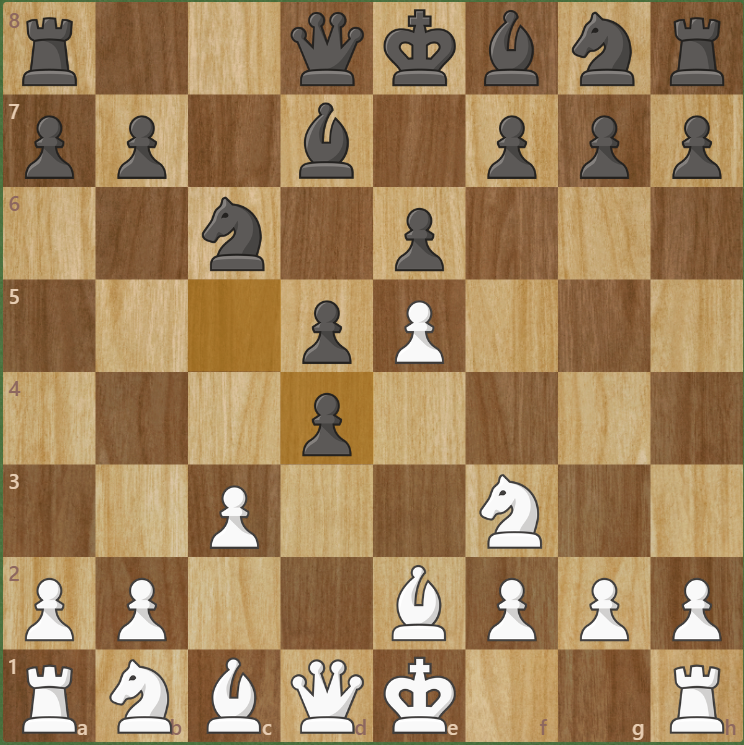


Huh, that’s not a typical move in the French Defence. Normally, you’d develop your knight to e7, f5. Putting pressure on the d pawn, and then you take. Maybe he’s trying to steer me off my prep? Nonetheless, I continue on though.
7. cxd4, Nge7
8. 0-0, Nf5
9. Nc3, a6
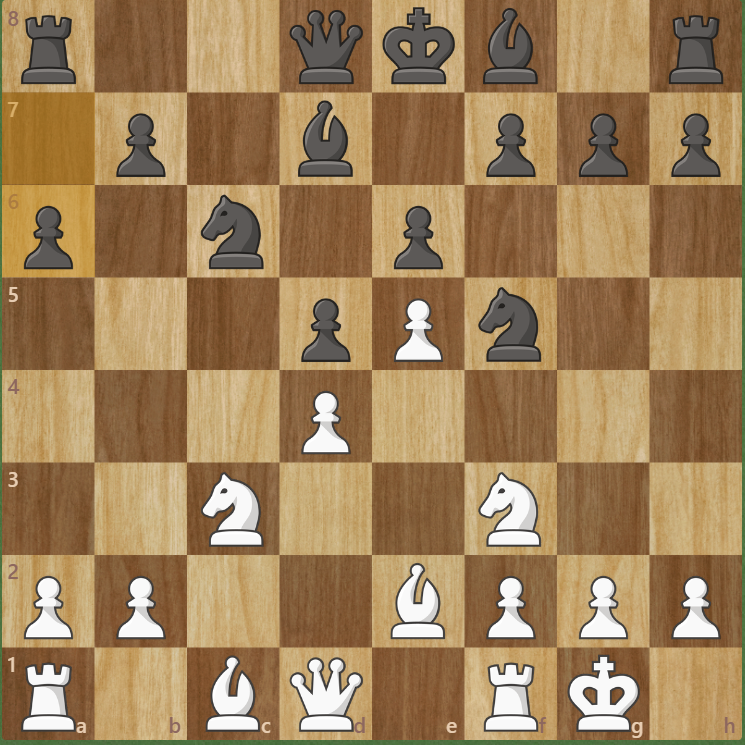
He spent 4 minutes thinking on that last move by the way. Besides from that, both of us haven’t spent any time at all making our moves since the game began. Which means we’re still in prep territory.
So what do I do now?
Clearly this position has been reached before. It’s a very popular tabia (google what this word means nerds). White can play various things like g4, making some sort of attack on the kingside. White can also play a3, which is always a useful move later. The bishop would like to develop to maybe f4 or g5, the rook would come to c1. a3 b4 repels the queenside forces. So many possibilities.
I play Bg5
You must be wondering, why would a GM like me play such a single-minded move. It’s giving straight ‘OOGA BOOGA. It attacks the queen, but black can just block with the bishop and castles right? I just wasted a move.
Well, the idea is quite simple, if Black blocks the attack with his bishop, trying to speed-up his development in the process, he’s actually getting rid of his better bishop.
Wait what, His better bishop?
Yes, his better bishop right now is actually his dark-squared bishop. Because 6 of his 7 pawns are in light squares. Which means, his light-squared bishop is bad. He should typically move his queen to maybe b6 or a5, to try to keep the tension and use my bishop as a target with his pawns.
for example:
10. Bg5, Qa5
11. a3, h6
12. Bf4, g5
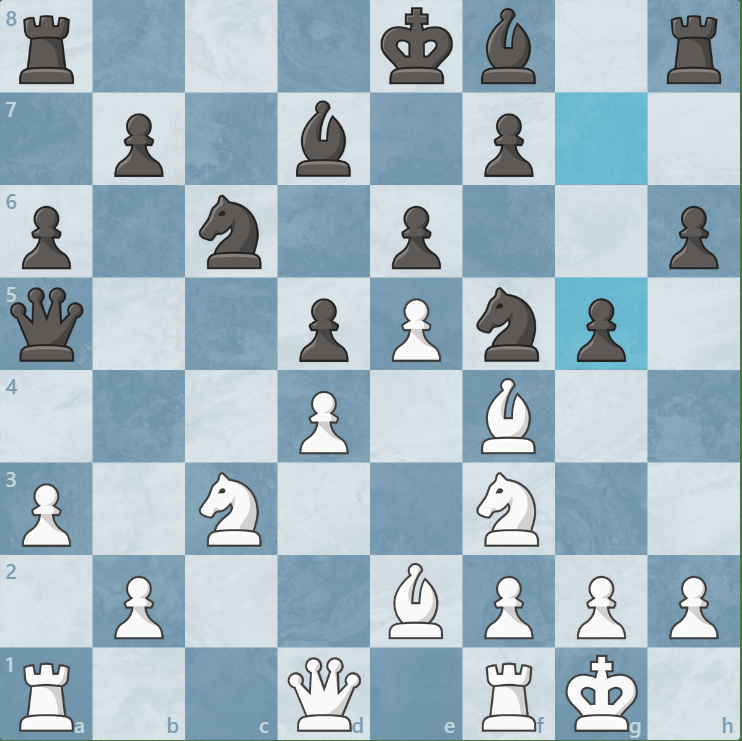
Black’s position is solid.
However, the move f6 is no good. Let’s say:
10. Bg5, f6
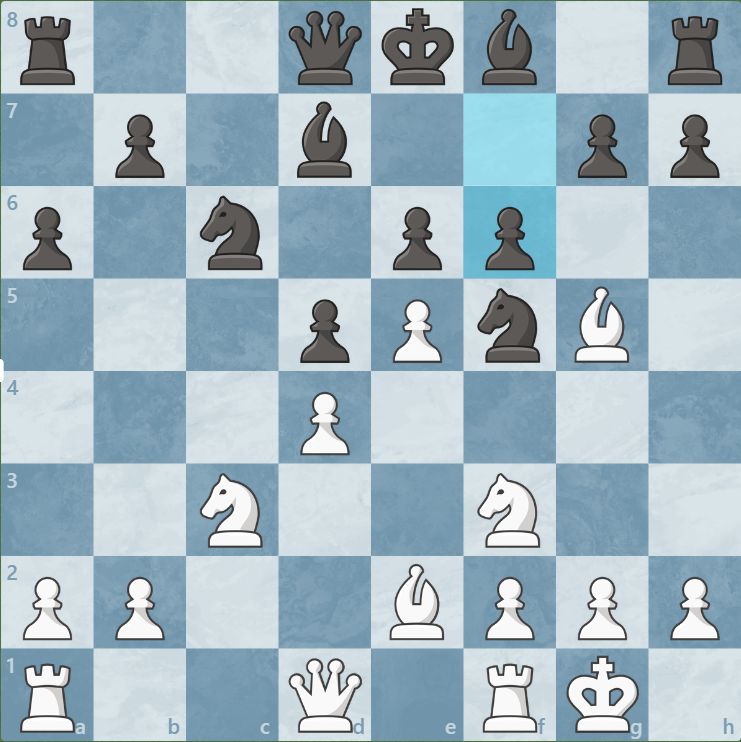
I would then play:
11. exf6, gxf6
It's not like it’s losing or anything. But there are various tricks here like sacrificing my Bishop to get this position:
12. Nh4. And if pawn takes g5, I would play:
13. Bh5 check. If Ke7, then
14. Nxf5, exf5
15. Nxd5, Kd6.
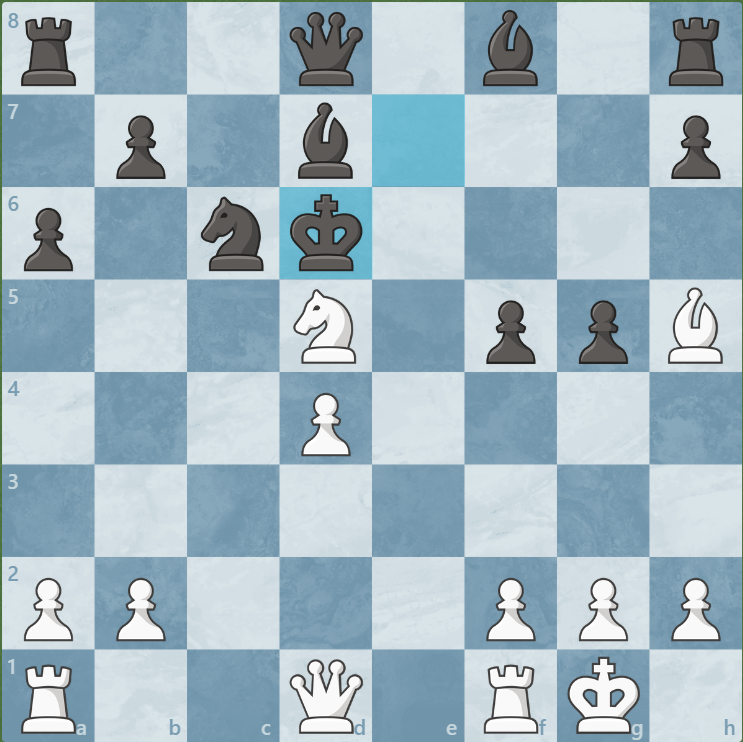
Hunting the king to the centre of the board. Shit will get really messy real quick. Especially if you don’t know how to handle pressure.
So, let’s continue the game. He plays:
10. Bg5, Be7
11. Bxe7, Qxe7
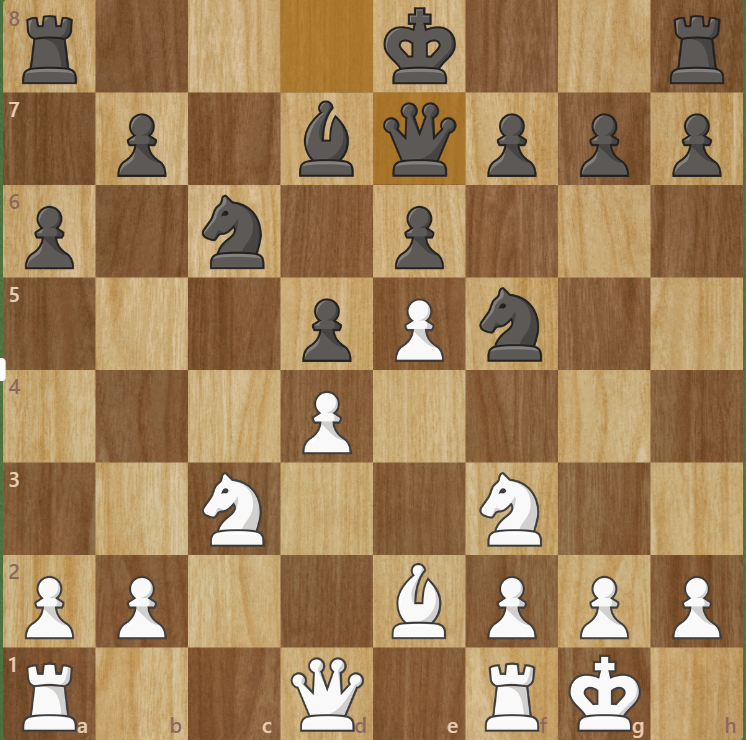
We’re now officially in middlegame territory. After queen takes, I sat silently and thought for 14 minutes. Most of it is because of the threat of Black’s queen going to b4. It might cause undue complications for me later. So I was calculating the line of what could happen after I play Qd2 or a3. The a3 move is simply because I don’t want the queen at b4. But then black would castle and go f6, which is a natural move I suppose.
I make my move,
12. Qd2, 0-0
Now this position has been reached a couple of times in the chess database, although you’d have to dig pretty darn deep for this line to pop up though. However, the following move I’m about to make is intended to throw this guy off his game. I’m evil I know. I am a firm believer that chess is a game of pattern recognition and calculation. Not memorizations. With that being said, I played my move:
13. Rae1
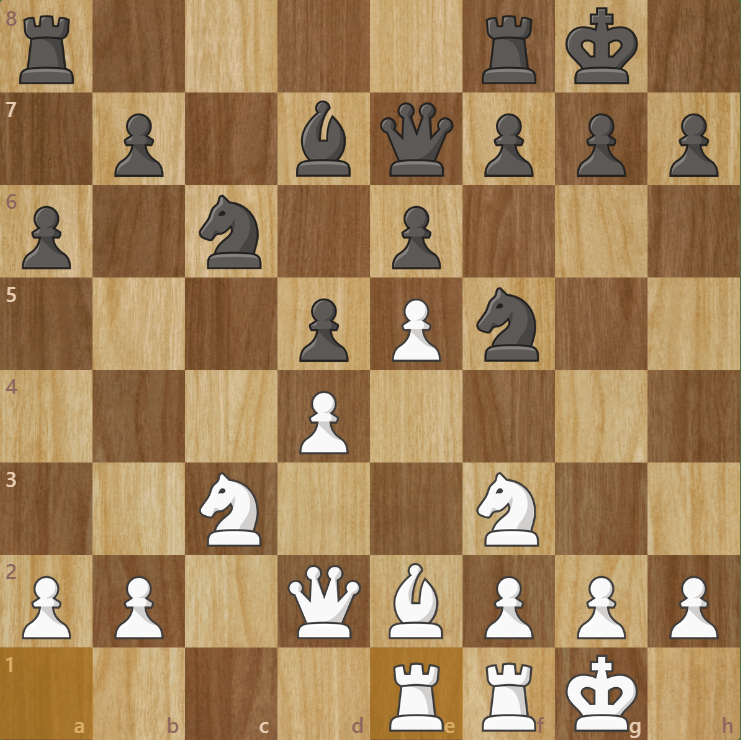
Huh?
Now you might be wondering, why has this move never been played at top level? To the low rated player, it looks like a natural move, you connect the two rooks and moved the ‘a’ rook to the open file. Well, this move is fascinating because: It looks stupid. It’s a stupid move.
Yeah but why though?
Because in chess, you want to activate BOTH your rooks. So naturally, my ‘f’ rook should’ve gone to e1 or d1 to support my center. Not my ‘a’ rook. That rook should’ve gone to c1 instead. Why? Because Na4 Nc5. You put the rook on the open file on the queen side to support that side, not smother your other rook.
Well ladies and gents, before you start arming yourselves with pitchforks and torches, just answer my question. What’s my worst piece on the board?
The bishop.
I would LOVE to put my bishop in d3 to get the diagonal. However, I would lose my d4 pawn in the next couple of moves because my queen was cut off from it.
“Oh ok, just go Bd1 and Bc2. You’d still get the diagonal!”
Ok then, let’s run a simulation shall we?
Let’s say I don’t play Rae1. Let’s say I play:
13. Bd1,
Black can play Qb4. So,
14. a3, Qb6
15. Ba4 (pinning the knight to the bishop), Nfxd4
16. Nxd4, Nxd4
17. Bxd7, Nb3
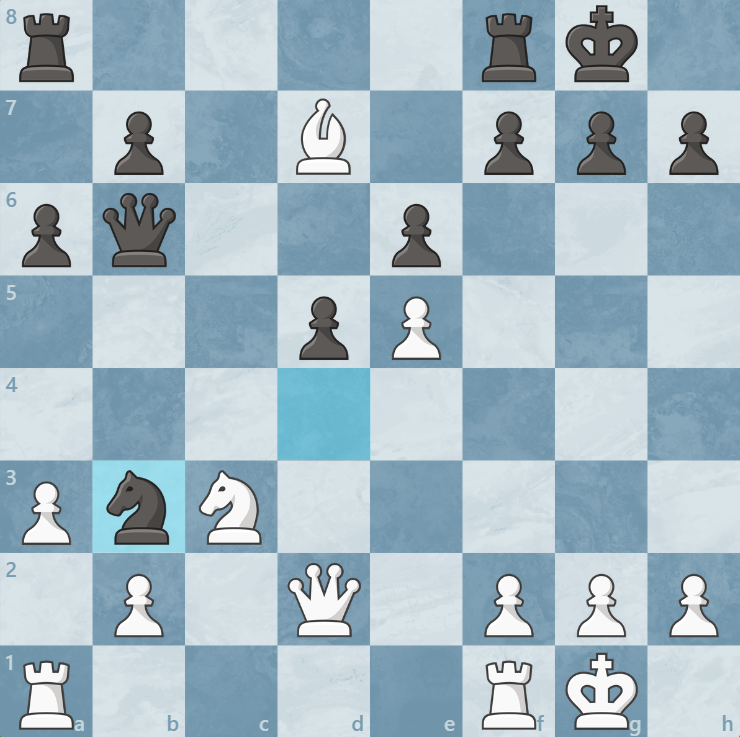
A fork of the queen and rook.
18. Qc2, Nxa1
19. Rxa1, Rfd8
20. Ba4, d4
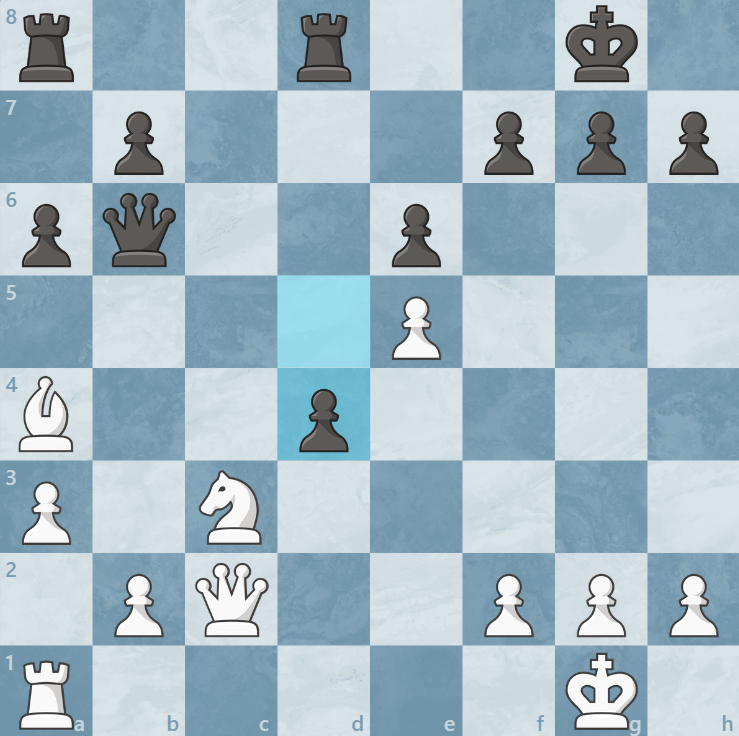
And the position is very unclear right now. Quite complicated.
Henceforth, before I play Bd1, I played
13. Rae1
So, the idea is this:
13. Rae1, Rac8
14. Bd1, Qb4
15. a3, Qb6
16. Ba4, Rfd8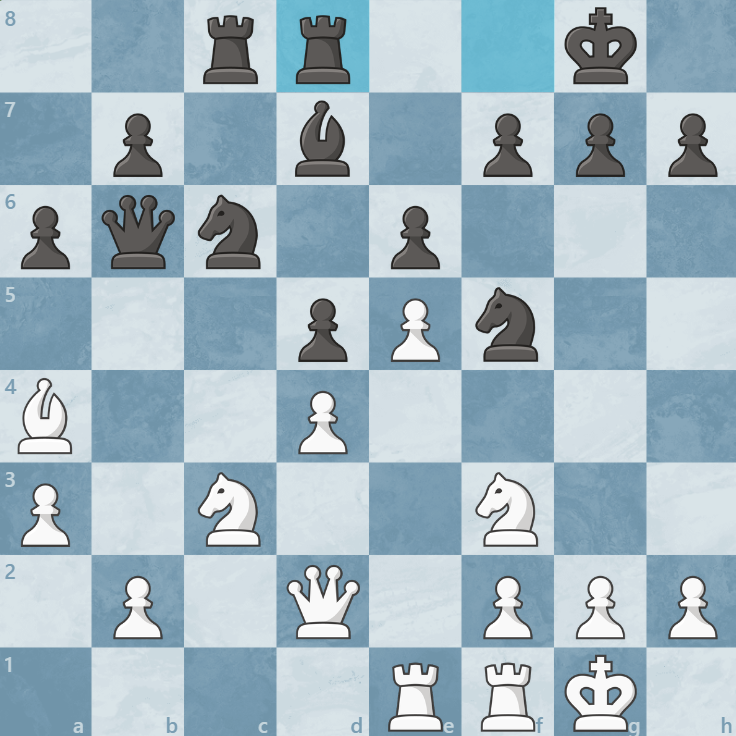
Notice how the knight didn’t take my d pawn? It’s because there’s no tactic as my rook is on the E file.
17. Bxc6, Bxc6
18. G4, Ne7
With that, I start an attack on the kingside. Remember my itty bitty rook on the E file? Yeah, it’s gonna go Re3 and Rh3. All of a sudden, it’s participating in the attack. I could also play h4 in the future, and play Re3 and Rg3.
Pretty nasty am I right?
So yeah, I kinda came up with this alien-like Rook move which in all recorded games of human history, has never been played before.
You nerds are still paying attention? I do so hope if you guys can’t visualise this shit, you would use an analysis board on chess.com or something, completely free. Fascinating stuff here.
So what else?
Let’s go back. Imagine if the black knight tries to liquidate my knight.
13. Rae1, Nh4
14. Nxh4, Qxh4
15. f4,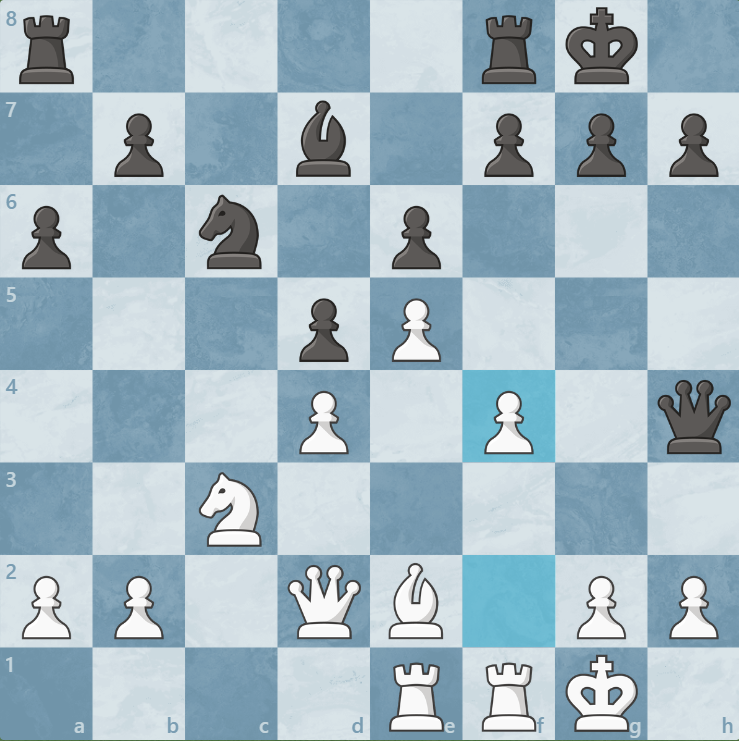
And now, I am in prime position to use my rooks together. All in all a nasty positional play.
Let’s get back to the real game.
13. Rae1, Qd8
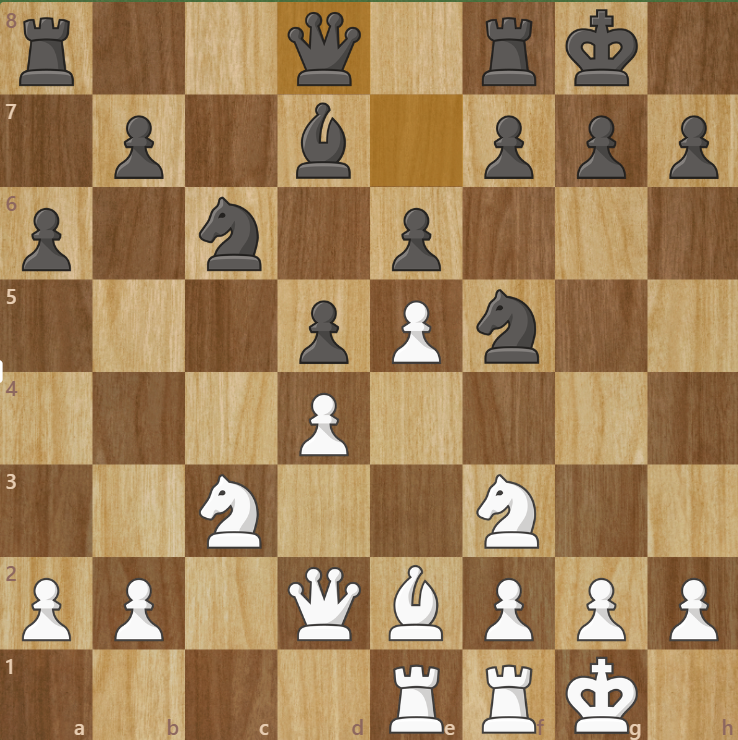
I knew he was rattled from my Rook move just now, fear and uncertainty gripped his heart like a vice. Mainly because he spent 20 minutes for that queen move. This is the power of unorthodox moves in chess. Especially in classical, where 90% of the match is prep.
I continued with my plan.
14. Bd1, f6
15. Ba4, b5
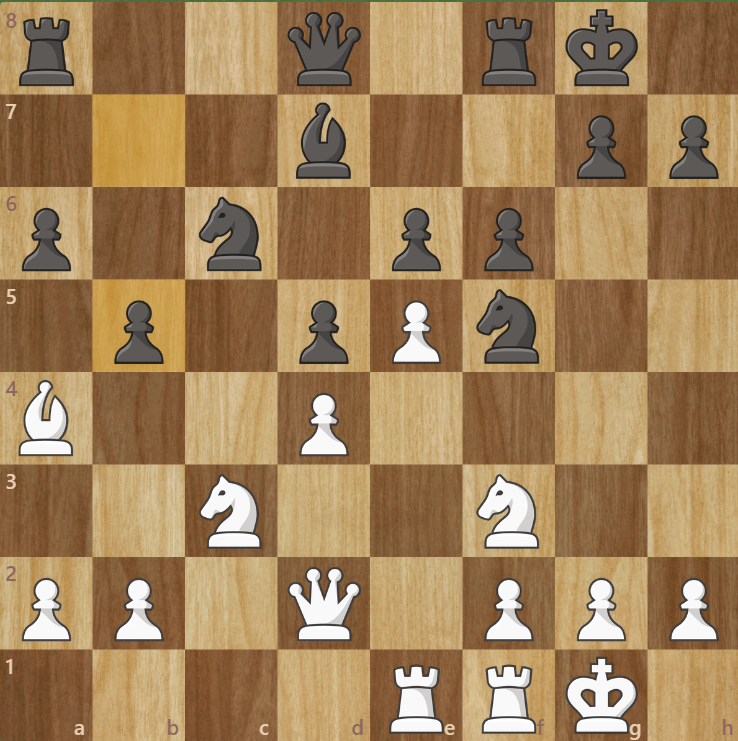
Why did I put my bishop there? To target the knight duh. That Knight is an integral player in the centre. So I want to get rid of it. Also, it forced him to move the pawn so I could use it as a potential target in the future with a4. It also creates a bit of instability, and the c5 square opened up to be potentially permanently habitable in the future. All in all, not a wasted move.
16. Bc2, fxe5
17. dxe5, Kh8
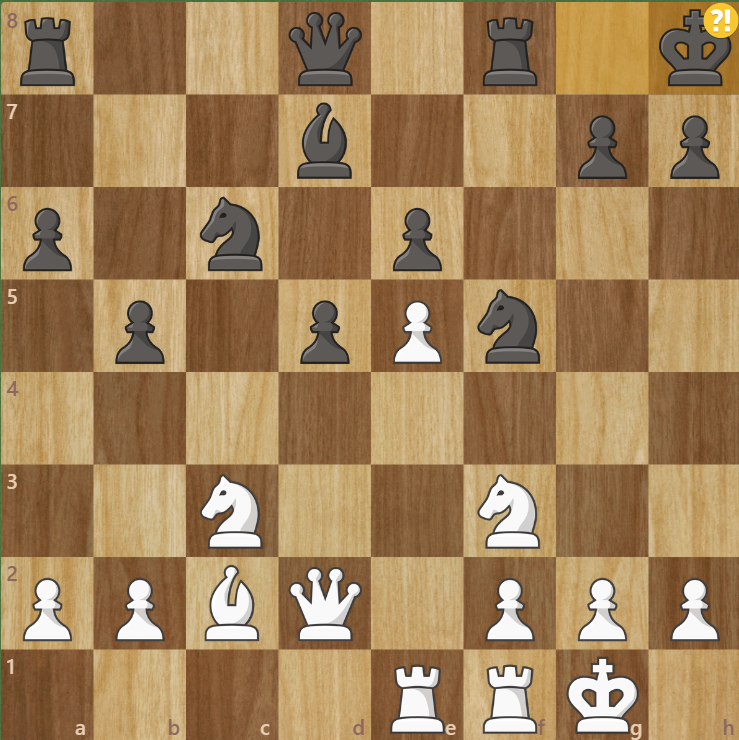
What the hell was that king move bruh.
Perhaps Shevchenko sensed potential tactics and sacrifices on the d5 square, that’s why he made that king move. To be honest, I think that’s an overreaction on his part. He should’ve gone Rc8 instead. Or maybe even Qc7 or Qa5. An aggressive move, albeit flawed one. But it stops me playing Ne2 because of the threat of a queen trade. I don’t want to trade queens just yet though. I’m going to keep it as long as possible. Why? Because of the endgame. It’s pretty damn useful.
My actual plan was if he went:
17. dxe5, Rc8
I would reroute my knight to e2 and Ng3 or maybe Nf4. After that I would play g4 to create some sort of attack.
Oh well, let’s continue with the game.
17. dxe5, Kh8
18. Ne2,
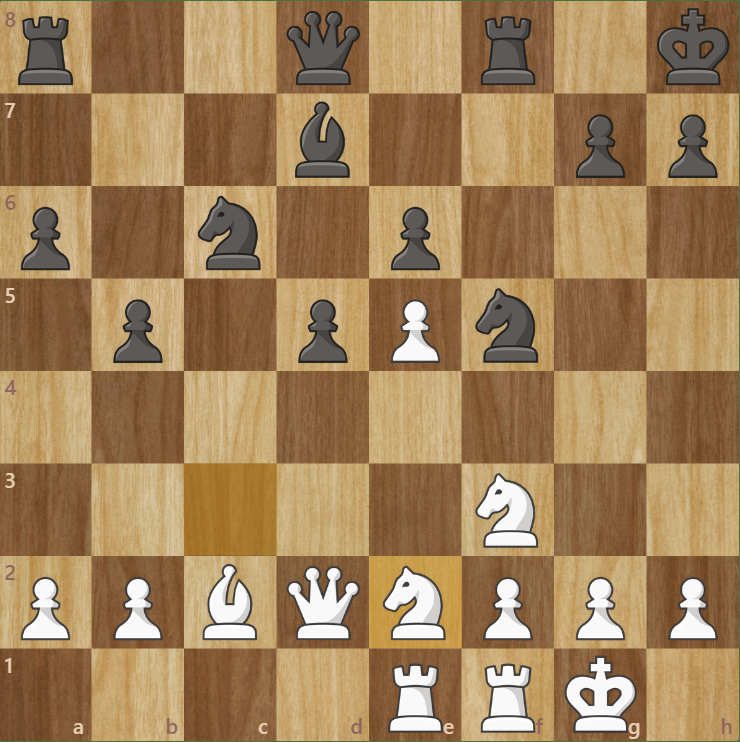
Rerouting my knight, that was always the idea. To put into perspective, the potential tactics he was so afraid of are like this:
18. Ne2, Rc8
19. Bxf5,
If exf5 then I win the d pawn and I get a passed pawn on the e file.
If Rxf4, then I go Ned4
So:
20. Ned4, Nxd4
21. Nxd4,
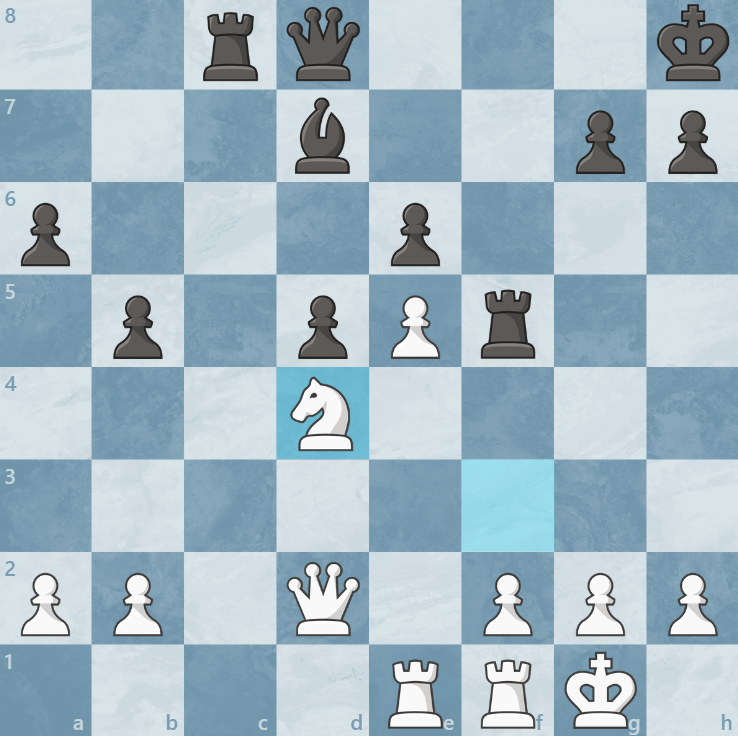
And now, we get into the most dreaded endgame for players. The French Bishop Endgame. This refers to typical endgames arising from the French Defense in chess, often characterized by Black's problematic light-squared bishop (the "bad bishop") stuck behind its own pawns on e6 and d5, forcing Black to maneuver it. Now let’s say we somehow someway trade our queens. This is even more of a precarious situation.
6 out of his 7 pawns are in light squares. His Bishop has absolutely no scope whatsoever, and my knight patrols the centre squares. Objectively stopping any invasion of his rook on c2. This is an endgame that I would 100% win even against Grandmasters. An IM? You do NOT want this to happen. That was why he was so scared.
This all comes back to my Bishop to g5 in the opening. That’s why you have to be VERY careful playing the move Be7 and trade the bishops. A very subtle mistake could lead to a chain of events exercising your downfall.
Getting back to the actual game:
18. Ne2, Nh4
19. Nxh4, Qxh4
20. f4
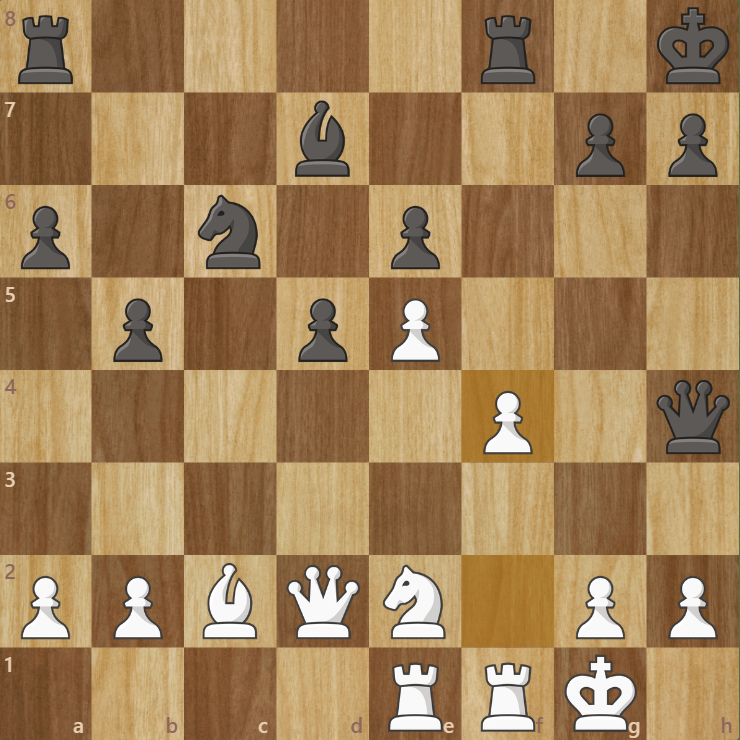
Remember my rook on e1? It’s all coming together now. My two rooks are prime for use in the f and e file. My f rook in particular can go to f3 and h3, attacking his queen and putting pressure on his king’s defences. All in all just winning.
20. f4, Rac8
I glance at the clock:
33:21 – 14:29
Ooof. Seems like my plan worked perfectly then. Shevchenko spent a LOT of time just calculating my tactics and potential threats. It’s doubly so when its in a very tense position against a player stronger than you.
Cool calm and collected, I continue improving my position and building the tension.
21. Bb1, Qh6
22. Qe3, Qh4
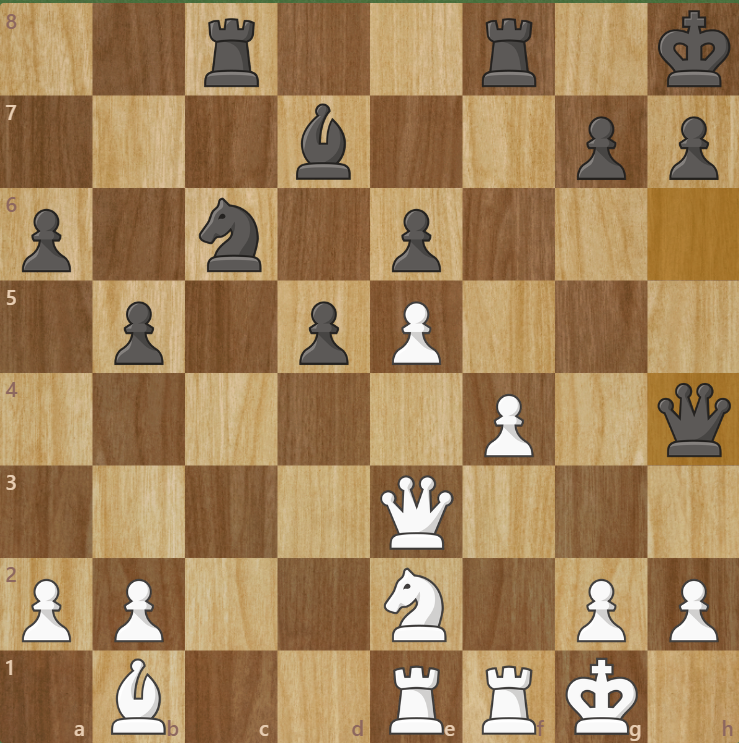
Can I play Qb6 here? Of course I can. But I don’t want to deal with tactics later in the position. It’s best to keep this simple and in my territory.
23. Rc1
My rook served it’s purpose on the e file, and went to the c file to put pressure on the position.
He played Qe7, and I immediately show him why bringing his queen back now doesn’t work as opposed to a couple of moves ago.
I play Qh3, dominating that side of the board. Putting absolute pressure on the h file.
24. Qh3, h6
25. g4,
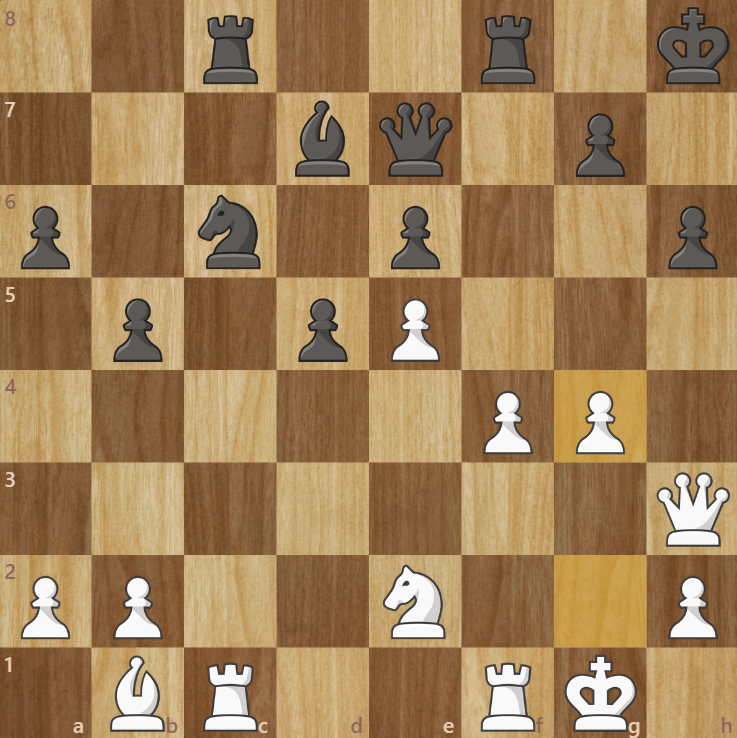
A pawn push.
Fun fact: I did not push any pawns except in the opening and f4. I had to recapture yes. But I only touched my centre pawns. The entirety of the game was played by manuevering, only making necessary pawn moves.
Until now.
Shevchenko is in deep trouble.
26. g4, d4
27. a3, Kg8
Then I played g5, pushing my pawn further.
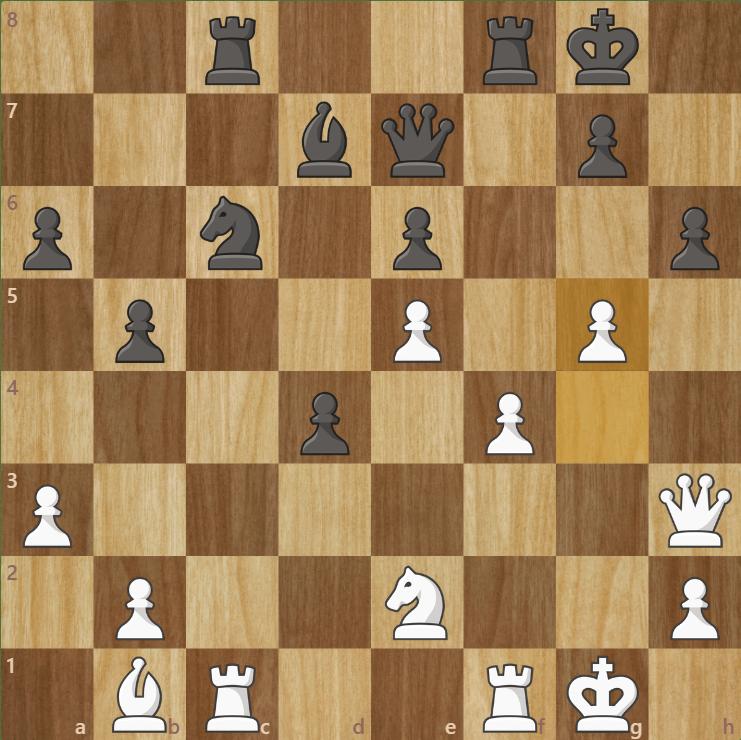
If hxg5, it’s mate in two. Qh7, Kf7 and Bg6 mate.
However to my surprise, Shevchenko played a move I didn’t expect.
Nxe5, sacrificing his knight in the centre of board.
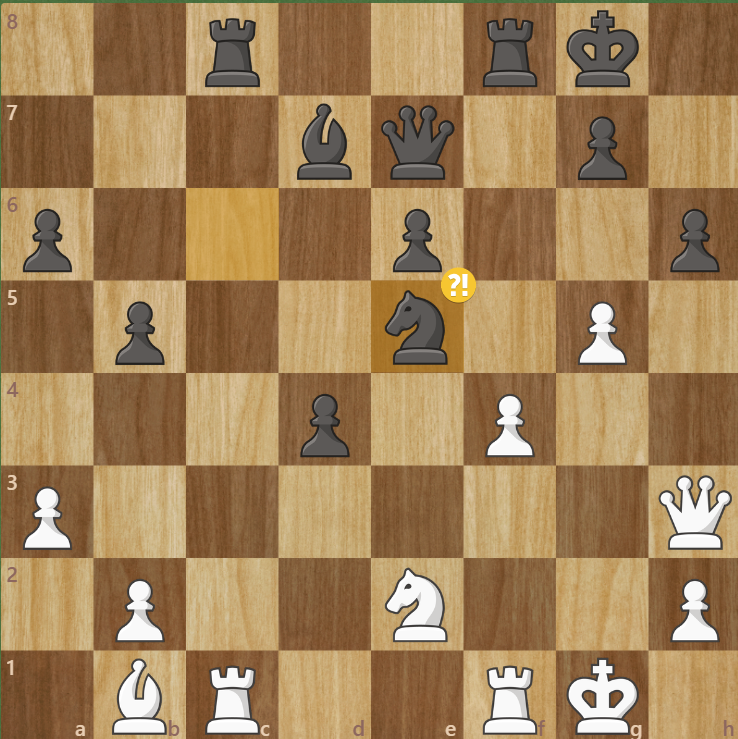
ignore the inaccuracy tag. This is an extremely creative sacrifice. If I take fxe5, he’d go Rxc1, Rxc1, Qxg5, Qg3, Qd2. And the position just got more complicated.
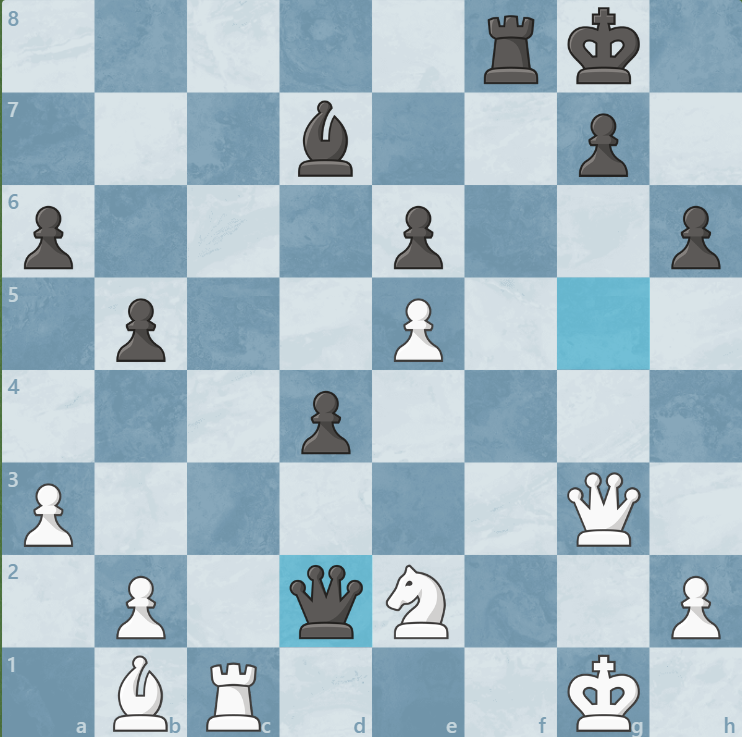
That’s why, before I take it, I trade the rooks first. So:
28. g5, Nxe5
29. Rxc8, Bxc8
30. fxe5, Qxg5
So black does get a pawn with check. However, I just guard with my queen.
31. Qg3, defending my king and the e pawn at the same time.
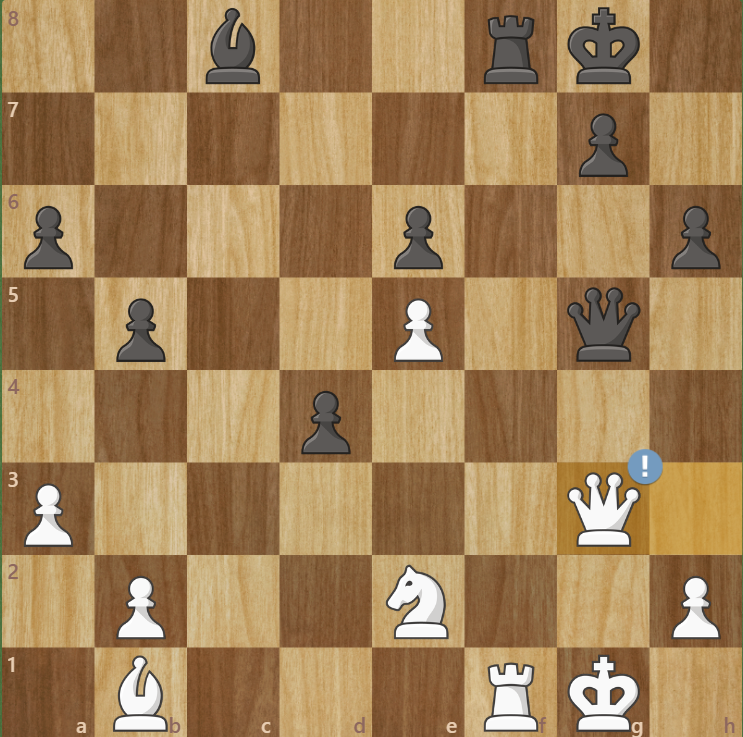
He knows he can’t trade his queen. It’ll put him at a greater disadvantage. So he trades rooks instead.
31. Qg3, Rxf1
32. Kxf1, Qd2
33. Bg6, Sealing off the king’s escape.
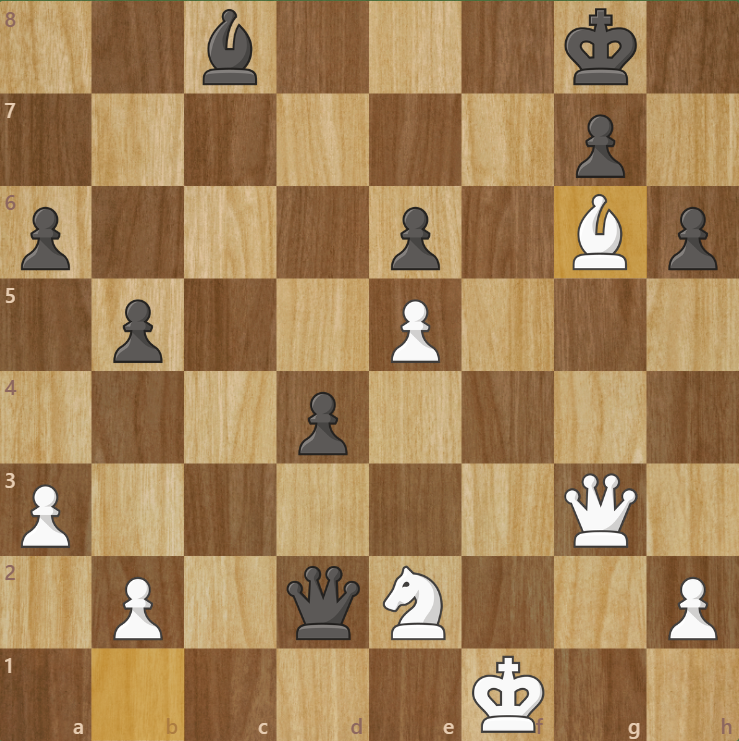
A really nasty position. I’m going to go Qf3 and just mate the king. There's no escape.
And in this position, IM Vasily Shevchenko shook his head in defeat, slumped back in his chair, sighed and extended his hand in resignation.
I clasped his hand and shook it good-naturedly. Giving him a smile.
“Good game” I offered. “You did very well against me. I had to calculate some problematic lines there”
Shevchenko stared at the board for a long moment, his eyes fixed on the e1 square where my rook had made its "illogical" debut. He let out a dry, tired laugh and leaned forward, his Ukrainian accent thick but clear.
"That Rook move," he gestured to the board. "Move 13. Rae1. I have studied the Advanced French for twenty years Khalid. I have never seen anyone play that.”
I leaned back, mirroring his posture. "It’s a bit of a 'cold water' move. It looks like a beginner’s mistake because it ignores the c file, but it was purely about prophylaxis. I knew if I could stop your ideas without compromising my d4 pawn, your bad bishop would eventually become a tombstone for your position."
He nodded slowly, tracing the path of the pawn structure with his finger. "I thought I could hold the draw by simplifying, but your 13th move took me out of my book and into a dark room. I spent all my time just trying to find the light switch."
We spent the next ten minutes in a "post-mortem," the traditional analysis where players discuss what they saw. A small crowd of spectators and a few other GMs—I noticed Ian Nepomniachtchi lingering nearby with a curious look—gathered around Table 2.
Shevchenko pointed to 16... Kh8. "I was terrified of Nf4 and the d5 sacrifices. I played too scared."
I showed him the line where, if he had played more actively, I would have pivoted to the kingside attack anyway. "The psychology was already set," I told him. "Once you start playing for the draw on move 10, the board starts to shrink."
As we stood up, he straightened his Ukraine pin and gave me a firm, respectful nod. "You are a monster, Khalid. The chess world has a good future with you in it. Good luck with the rest of the tournament."
"Thank you, Sir. I’ll see you at the closing ceremony." I acknowledged.
As I watched him leave, I sneaked a glance at my next opponent for tomorrow, Ian Nepomniachtchi. That’s gonna be a tough one to beat. His style is characterized by dynamic, intuitive, and maximalist chess, favoring sharp, tactical battles and imbalances over quiet positions, often playing with rapid, instinctive moves that can overwhelm opponents but sometimes lead to mistakes; he's a fast, aggressive, universal player who seeks complications and fights for wins rather than equality.
In essence, he's an exciting, risk-taking player who brings energy and tactical sharpness, often described as a "blitz attacker" even in classical chess due to his speed and love for sharp positions.
I got up and stretched my body, releasing the stiffness in them and flexing my muscles. I always believe that a healthy body constitutes a healthy mind. Therefore, I always keep my body fit. Not like a bodybuilder or anything, more like an MMA fighter. Yes, I train MMA in my spare time.
You guys must be wondering. Who the hell am I right? And why did I say that I have an unfair advantage against others? Well, let me take you wonder by wonder, over sideways and under on a magic, carpet riiiide
A WHOLE NEW WOOORLLLDDD.
Ok that was bad. But I have ADHD, so suck it nerds.